
Hello !
I hope you are all doing well.
When seasons change, it is important to honour what your body needs and craves. For me, and my family, it has involved lots of comfort food and familiar tastes. This month, we begin by making the utmost comfort food for Egyptians - Lesan ‘Asfour, or, ‘Bird Tongue soup’, as it literally translates (really, just toasted orzo in a very good broth with a few tricks here and there). For our main, we make Goulash, a meal often taken for granted, but works so well in this transition between seasons. For dessert, we make Portokalopita; a demonstration into a different use of phyllo pastry that renders the most wonderful of Greek desserts - fragrant, balanced and custardy.
Have a good meal.
With every good wish,
Marie x


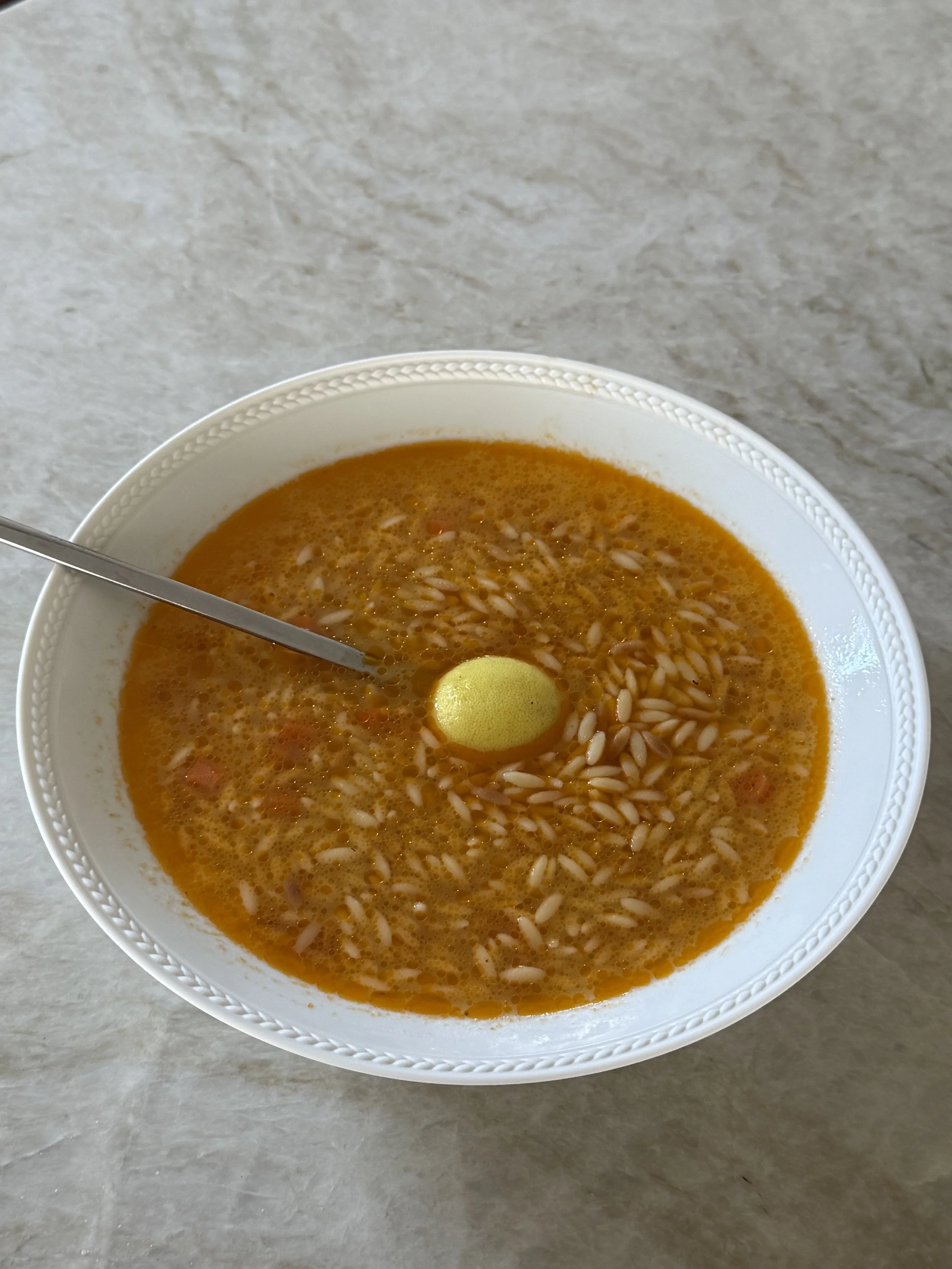
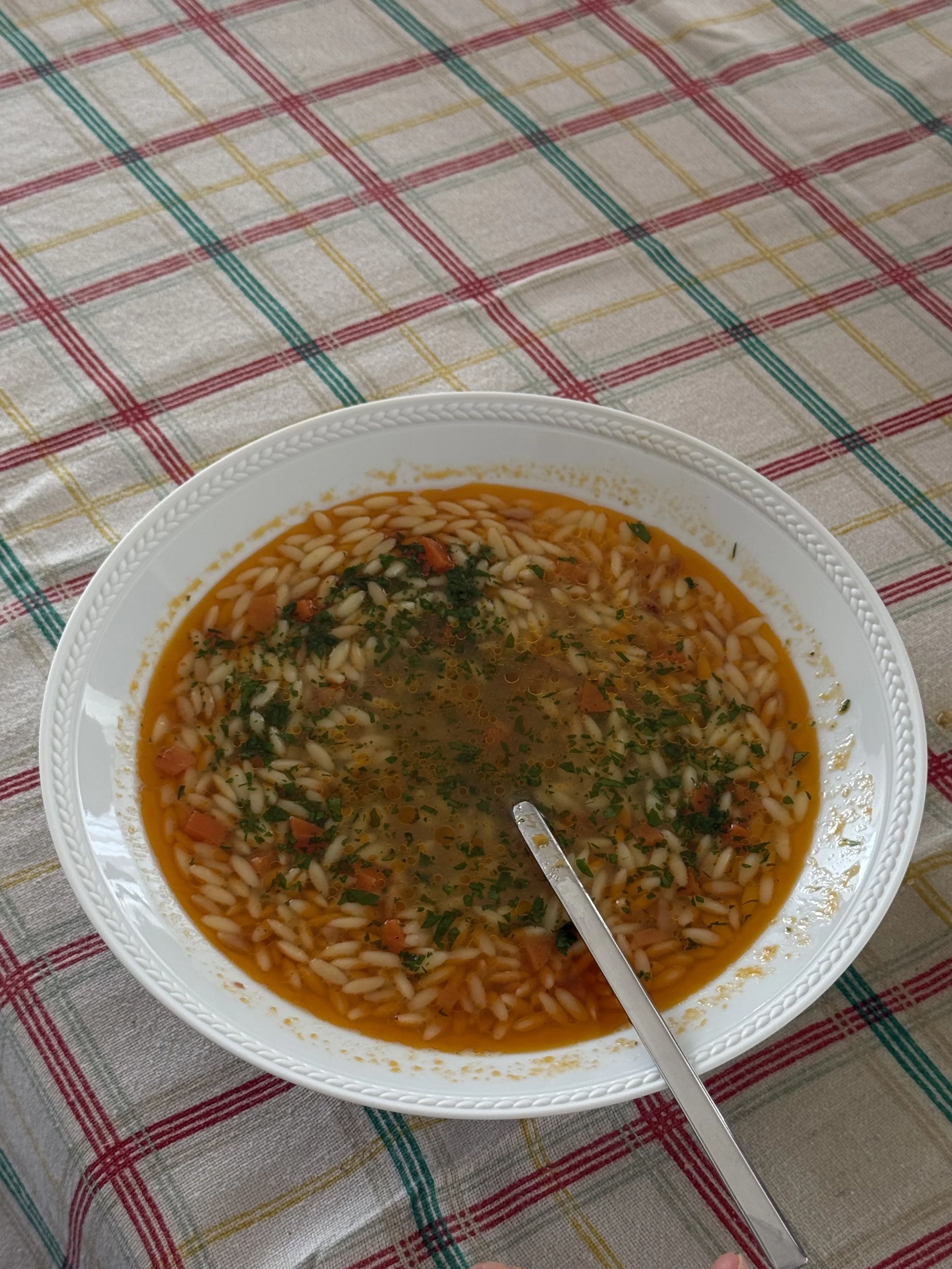
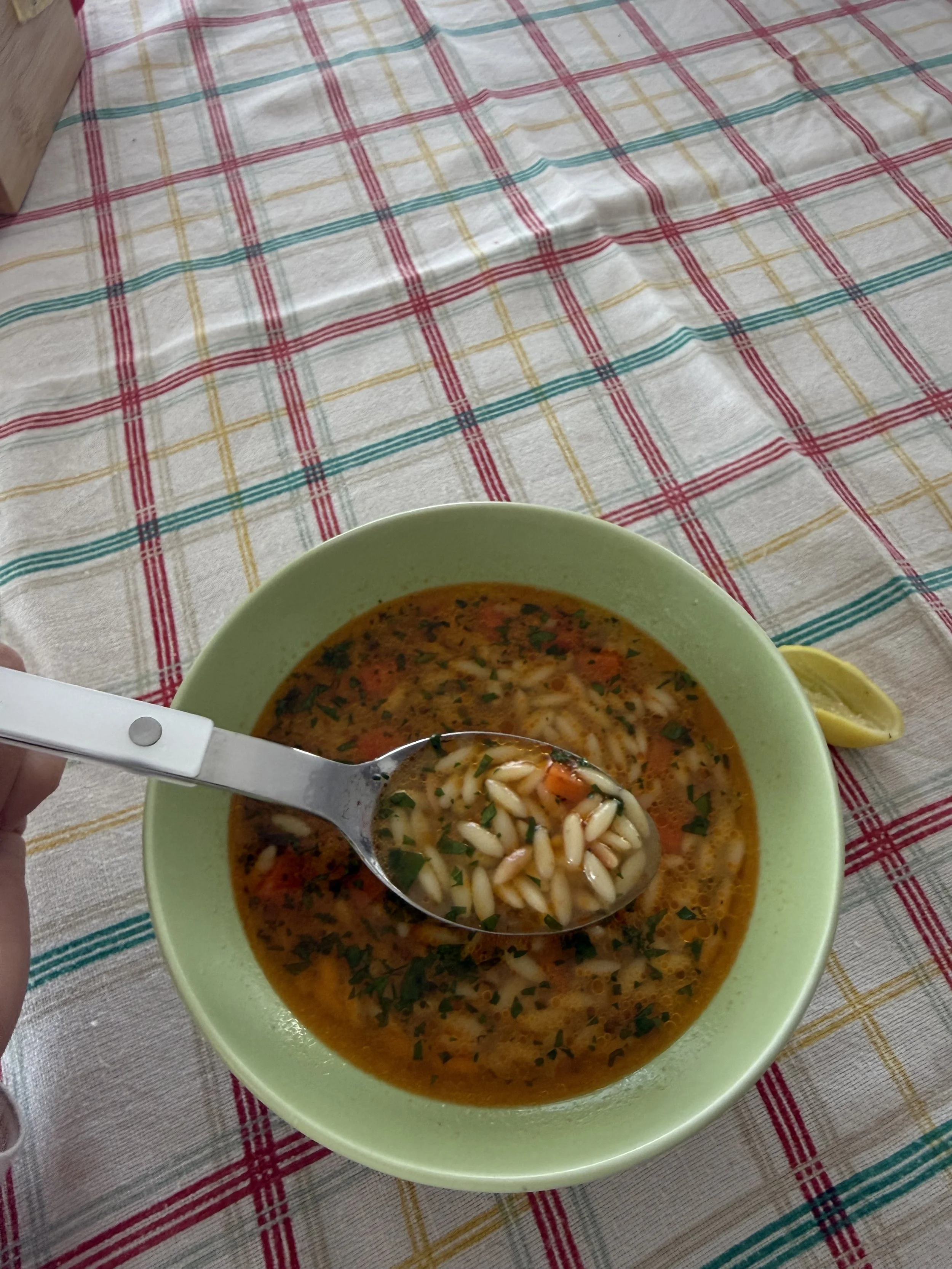
Bird Tongue Soup
Something happens, every year, where I have a strong craving for comfort food right before the summer begins. Most specifically, soups. Maybe the thought of summer, and the natural tendency to be in the outdoors more often, gives me a desire to revert back to the comfort of making broths, simmering food etc…and nothing compares to this iconic Egyptian soup, loved by almost an entire population. What probably makes it most memorable is its time Lesan ‘Asfour literally translating to ‘Bird Tongue Soup’. Whilst many parents use this nomenclature as a way to entice children towards (or perhaps away?) from it, I have to admit - no bird tongues are harmed in the making of this soup. Particularly this many. The name simply derives from the use of orzo in the soup. In a really good broth. And we toast the orzo too. The process is very simple, but it really is an incredibly comforting dish with a few tricks that give it its unique character.
Bird Tongue Soup (Lesan ‘Asfour’ ) Recipe
Ingredients
For the broth
1 medium whole chicken
1 medium onion
1 tomato
2 sprigs of celery
2 bay leaves
4 cardamom pods
1tsp black peppercorns
Salt, to taste
Enough water to cover the pot
For the soup
400g orzo
2 tbsps olive oil
1-2 tbsps tomato paste
1 carrot, finely diced
5-6 cups homemade chicken broth
Salt, to taste
Freshly ground black pepper, to taste
Lemon, for serving
Chopped parsley, optional
Method
Step 1 - In a large pot, place the chicken, onion, tomato, celery, bay leaves, cardamom, peppercorns, and salt. Cover with water. Bring to a boil, then simmer gently for about 1 hour to 1 hour 15 minutes, depending on how big your chicken is. Skim the foam occasionally. Strain the broth and keep the chicken aside for shredding when ready to serve.
Step 2 - In another pot/deep pan, heat the olive oil over medium heat. Add the diced carrots and tomato paste. Once fragrant, add the orzo and stir constantly until it toasts and turns golden brown, it will take around 5 minutes. Do not rush this step as it gives the soup its distinctive character.
Step 3 - Pour in about 5-6 cups of chicken broth. Stir well, bring to a simmer, then cook for 8-10 minutes, until the orzo is tender. Lesan ‘asfour thickens and overcooks. Add more broth if you want it lighter and soupier. Season with salt and black pepper.
Serve hot with some lemon wedges, chopped parsley and if you would like, some shredded chicken from the broth we made earlier.

Egyptian Goulash with Minced Meat
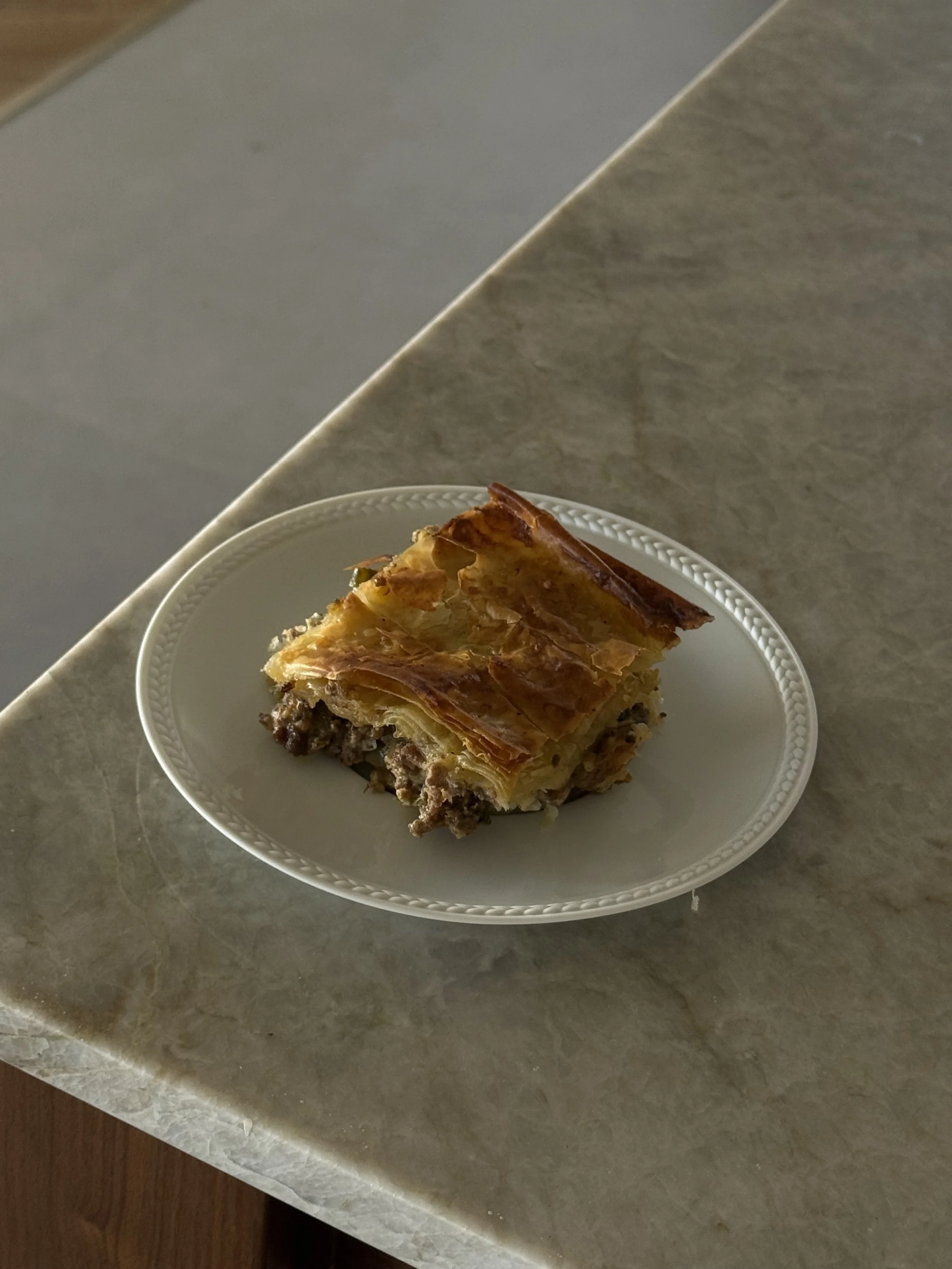
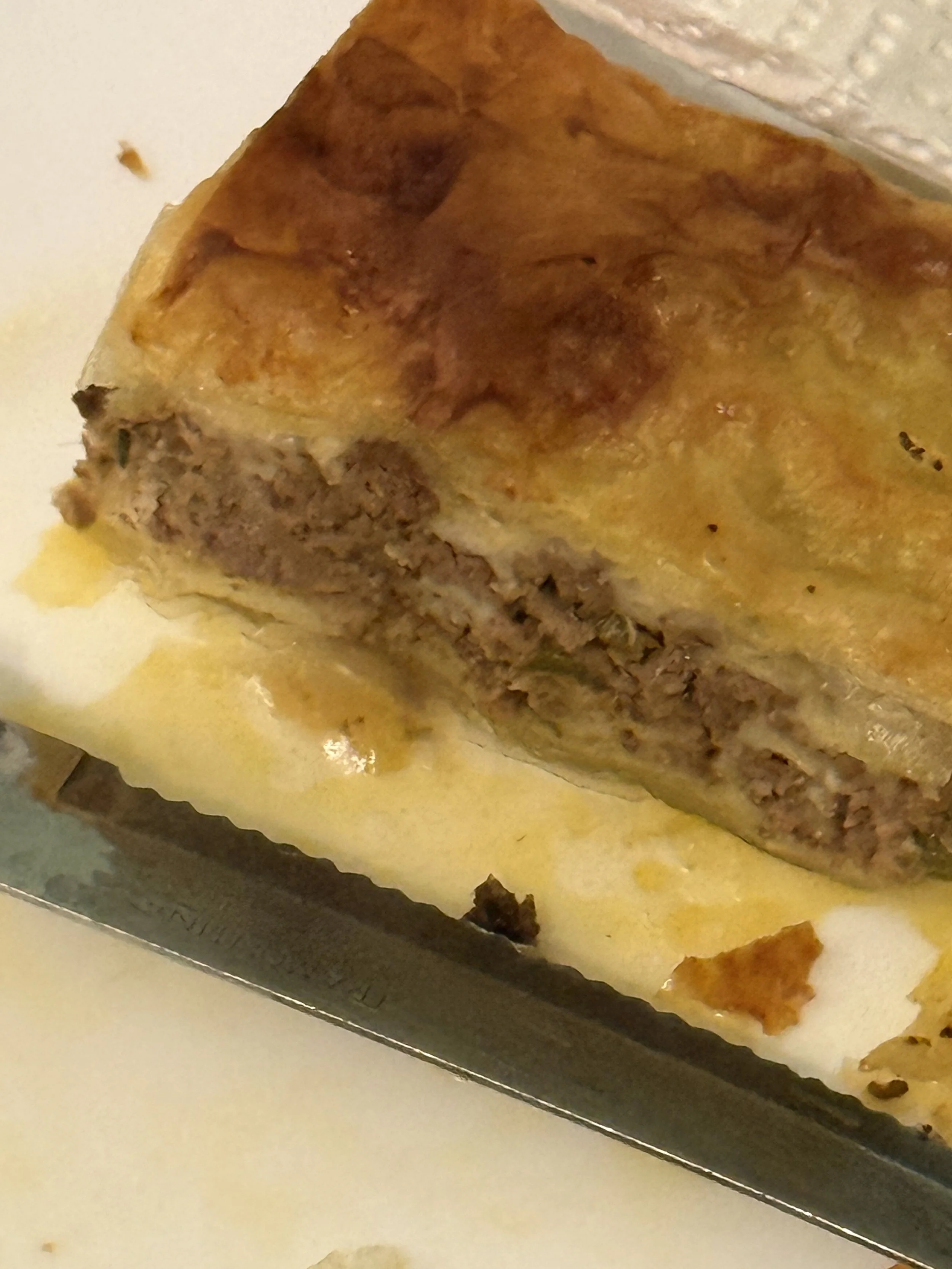
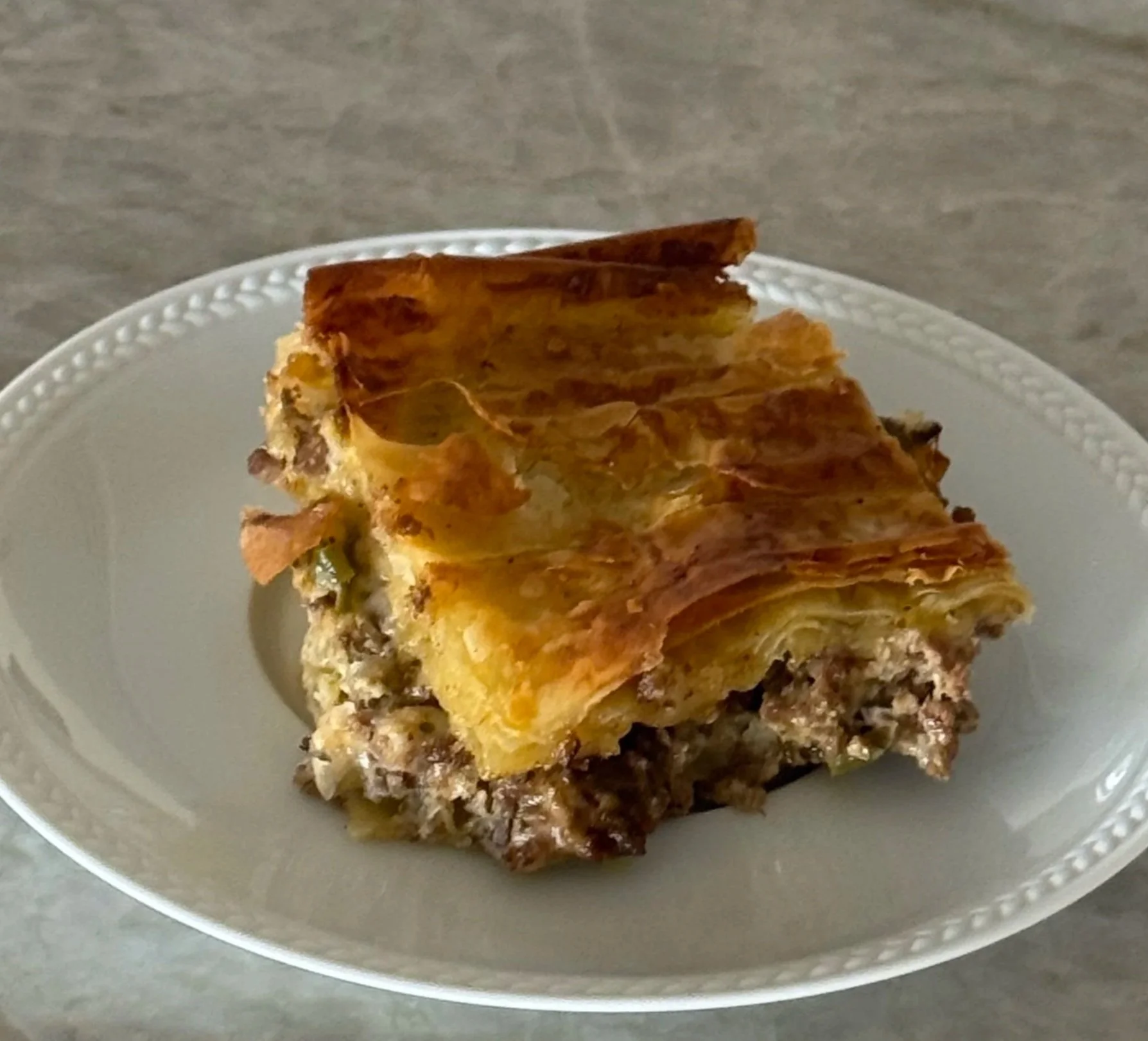
For this menu, we have two different applications of phyllo pastry, in order to show how versatile of an ingredient it is. In this case, we make Egyptian meat goulash; different from its stew / soup connotation. We are talking about a layered crispy phyllo meat pie, beautifully seasoned. It makes a very hearty main, which may be balanced with salad, pickles etc…for added brightness. It is deeply savoury and very well seasoned.
Egyptian Goulash Recipe
(Serves 4-6)
Ingredients
For the filling
500g minced beef
1 large onion, grated
1 tbsp butter or oil
1 tsp salt, or to taste
½ tsp black pepper
½ tsp ground cinnamon
½ tsp allspice
¼ tsp nutmeg
For the pastry
1 pack phyllo pastry, around 450g
150g melted ghee, butter or half butter/half oil
For the soak
1 cup milk
1 egg
½ tsp salt
¼ tsp black pepper
Method
Step 1 - Heat the oven to 180°C. Fry the onion in butter or oil until soft and lightly coloured. Add the minced beef and cook until browned. Break it up well as it cooks. Add salt, pepper, cinnamon, allspice and nutmeg. Cook until the mixture is fairly dry, not watery. Let it cool slightly.
Step 2 - Brush a baking tray with melted butter. Lay down one sheet of phyllo, brush with butter, then repeat until you’ve used about half of the phyllo pastry. Do not worry too much if the layering is not too neat, or if some phyllo cracks.
Step 3 - Spread the meat filling evenly over the pastry. Layer the remaining phyllo sheets on top, brushing each sheet with butter. Brush the top generously. Fold the final phyllo sheet into the baking tray, as neatly as possible.
Step 4 - Using a sharp knife (ideally serrated), score the goulash into squares or diamonds before baking.
Step 5 - Bake for 20-25 minutes, until slightly puffed and just beginning to brown. Take out of the oven, and mix the milk, egg, salt, and pepper. Pour it evenly over the cut pastry, letting it sink into the gaps. Bake for a further 25-30 minutes, until deeply golden, crisp on top, and bubbling slightly at the edges. Let it rest for 10 minutes before cutting through it. Enjoy with a side of salad, yogurt and/or pickles.

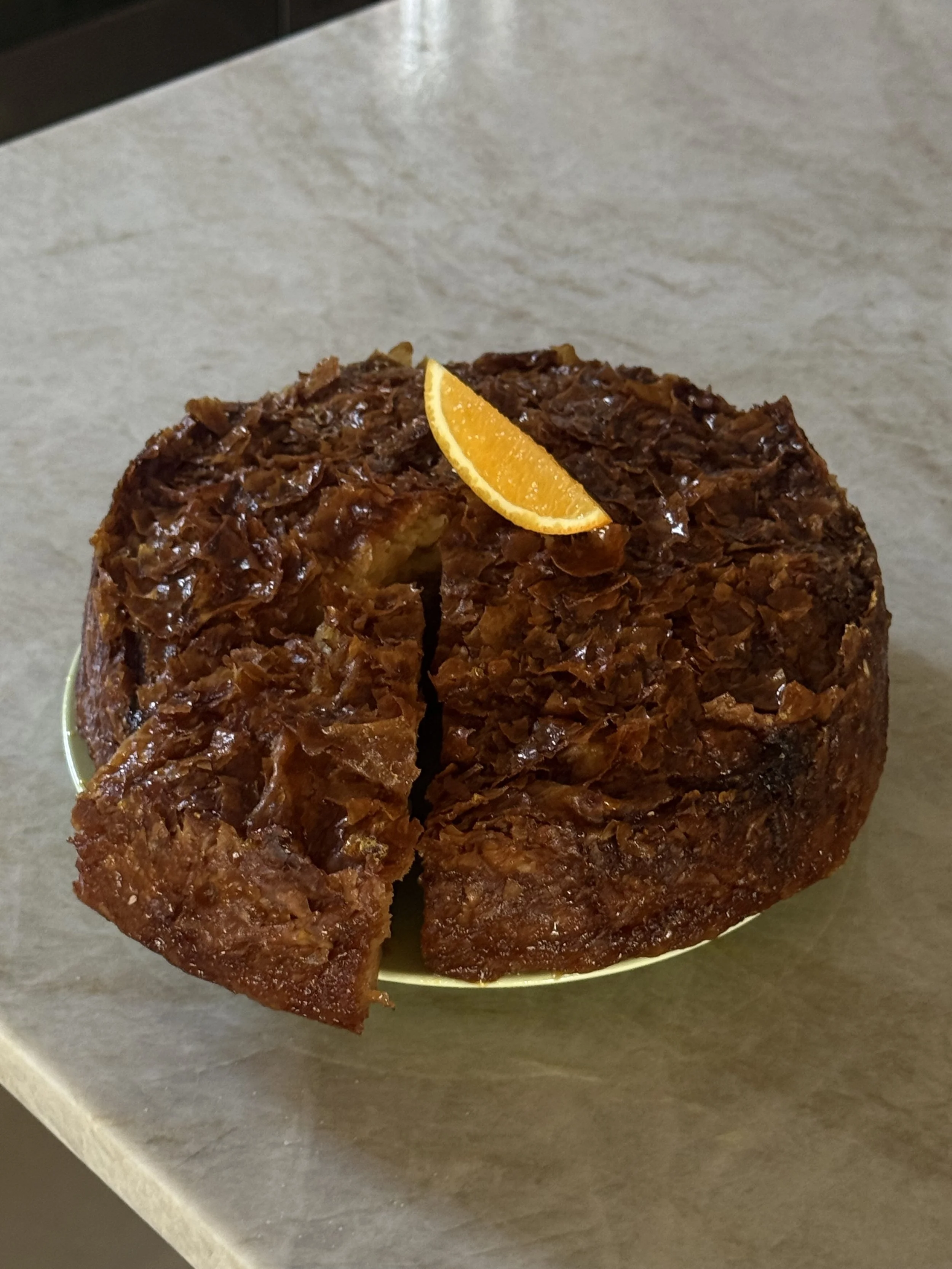
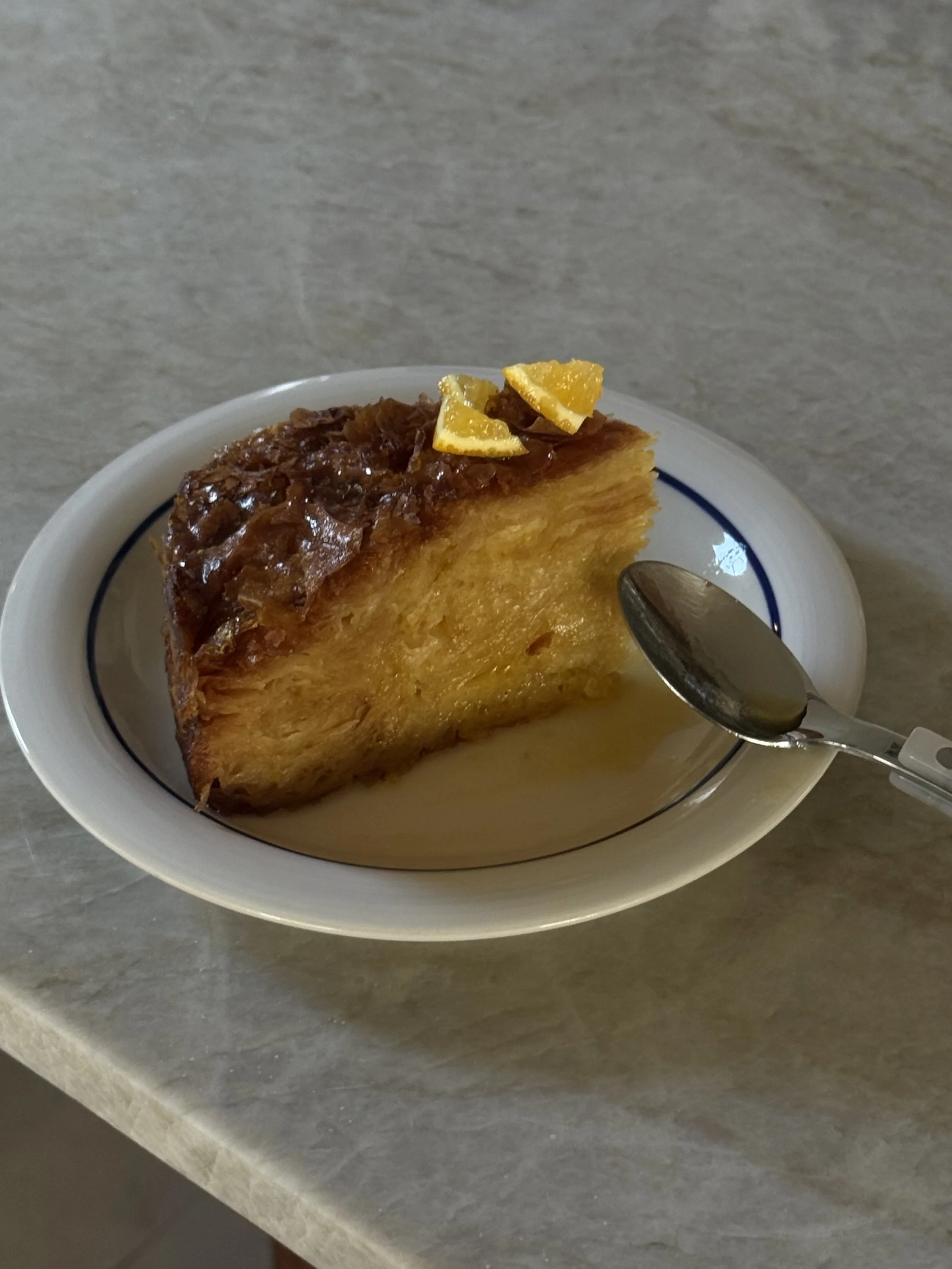
Portokalopita
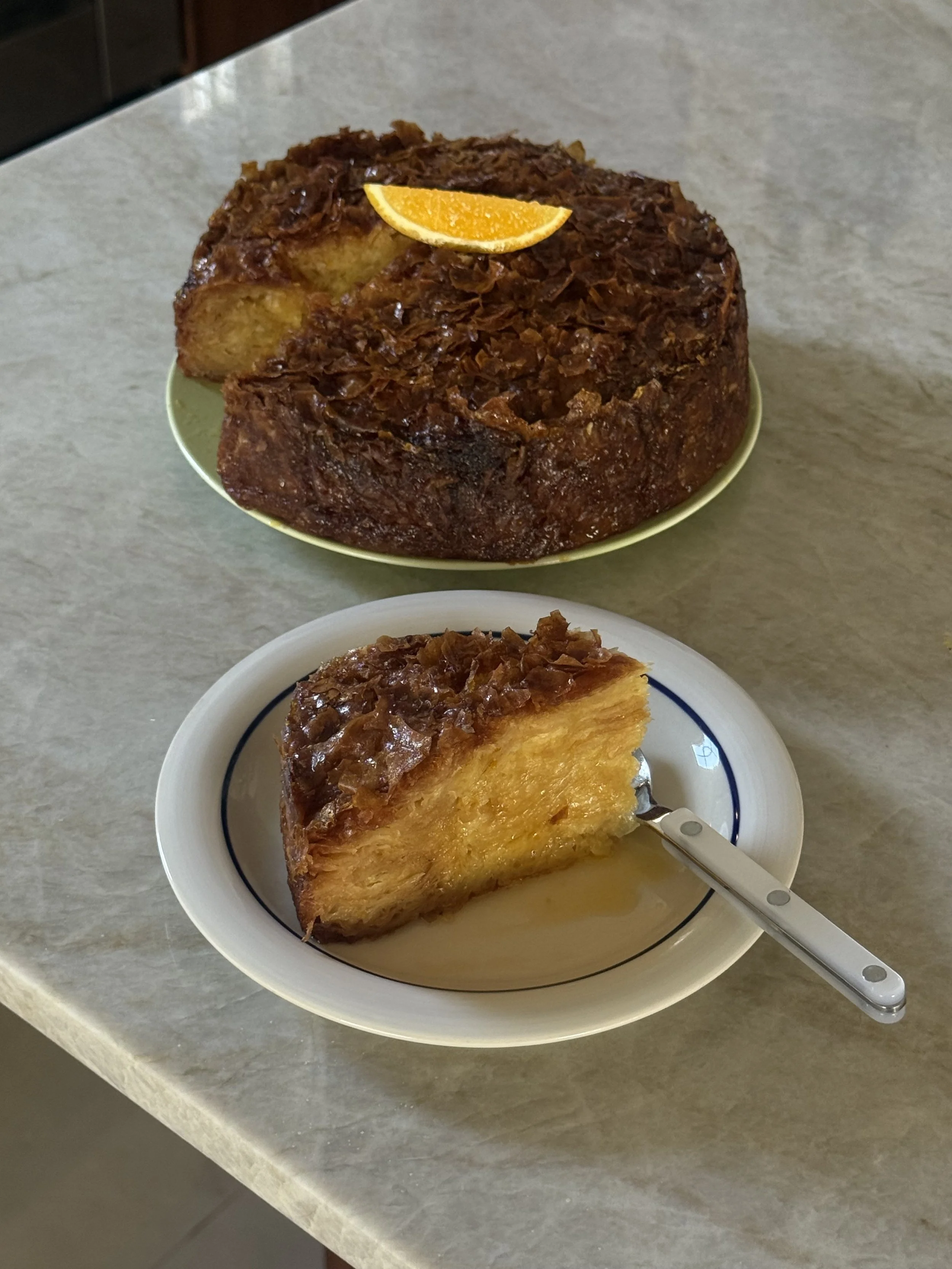
Despite my Greek heritage, you will very rarely find me making a Greek dessert, as I often find them too sweet. Whilst there are a few exceptions, the one that stands out most to me is Portokalopita, which I would choose any day over baklava, karydopita, loukoumades etc…I think it’s because the citrus provides more depth and an acidity which really balances the often overwhelming sweetness. This recipe is brought to you mainly by my grandma Nini’s method, but also draws on some elements from the incredible Ravneet Gill’s recipe, such as adding butter and reducing the water content in the syrup.
Portokalopita Recipe
Ingredients
450g phyllo pastry, thawed if frozen
3 large eggs
180g caster sugar
250g full-fat Greek yogurt
20ml light olive oil
80g unsalted butter, melted
200 ml fresh orange juice
Zest of 3 oranges
1 tbsp baking powder
½ tsp bicarbonate of soda
1 tsp vanilla extract
¼ tsp salt
For the syrup
3 oranges, freshly squeezed, around 300ml
Zest of 1 orange
1 lemon, juiced
200ml water
200g sugar
1 cinnamon stick
1 tsp orange blossom water, optional
Method
Step 1 - Dry the phyllo pastry - Heat the oven to 120°C fan. Lay the phyllo sheets loosely over baking trays and dry them for 8-12 minutes, until crisp but not browned. Do this process in batches so that all the sheets dry well. Let them cool, then crumble into rough flakes. They should look like a glorious papery mess.
Step 2 - Prepare the syrup - Put the orange juice, zest, lemon juice, water, sugar and cinnamon stick in a pot or saucepan. Bring to a boil, then simmer for 5 minutes. Take off the heat. Add orange blossom water, if using. Allow it it cool completely.
Step 3 - Make the portokalopita batter - Turn the oven up to 180°C / 160°C fan. In a large bowl, whisk the eggs and sugar for 1-2 minutes, until slightly pale. Whisk in the yogurt, oil, melted butter, orange juice, orange zest, vanilla, salt, baking powder, and bicarbonate of soda. Fold in the crumbled phyllo gradually. Add handfuls, stir, add more, stir again. Do not over-stir, but make sure there are no dry phyllo crumbs.
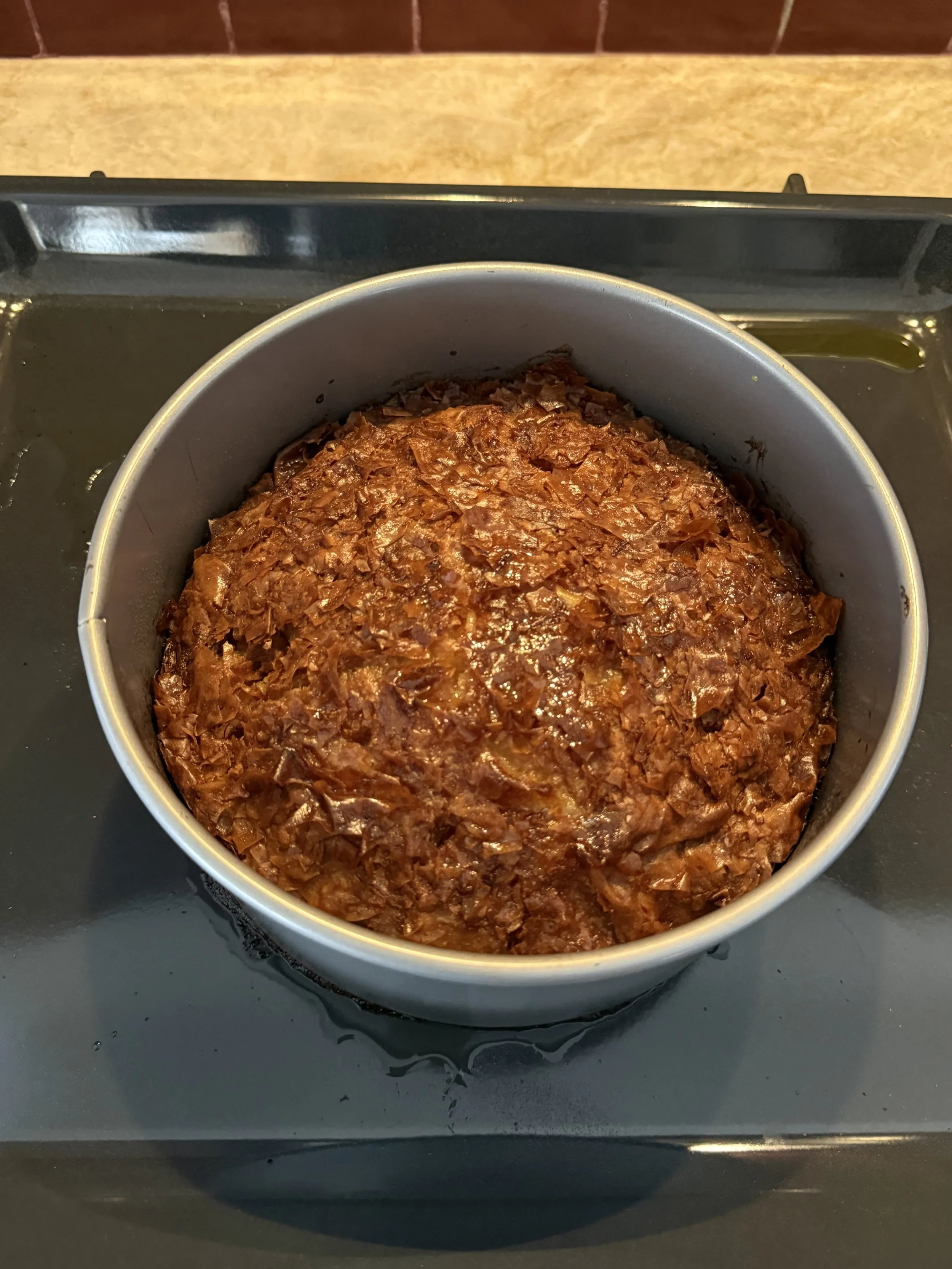
Step 4 - Grease your baking dish well and line the bottom with parchment paper. Pour in the mixture and level it gently. Bake for 40-50 minutes, until deeply golden, puffed, and set in the centre. A skewer should come out mostly clean, but not bone-dry.
Step 5 - As soon as the cake comes out of the oven, poke holes all over with a skewer. Ladle the cool syrup slowly over the hot portokalopita. Add it in stages, waiting a minute between additions so it can absorb properly.
Step 6 - Let it cool to room temperature, then cover and refrigerate for at least 4 hours, ideally overnight. The flavours will deepen and the syrup will run its way throughout the whole portokalopita. If you intend on serving it hot, I would make a larger batch of syrup, and spoon some extra alongside each slice of portokalopita.
Our meal has now come to an end.
I hope you enjoyed it.
Have a delicious time, until we meet next week